Kathi's Caregiving
Caregiver (verb): - (One who provides direct support for one who is in need of practical help, encouragement and love

Caregiver's Corner
As someone who’s walked the path of caregiving, I want to start by saying this: I see you. When my husband David was diagnosed with cancer in 2022, my world shifted in ways I couldn’t have imagined. We’ve often said, “We were the LAST couple anyone ever thought would be touched by cancer.” Suddenly, I wasn’t just his wife—I was his advocate, his nutritionist, his researcher, and often, the one holding us both together when things felt like they were falling apart. Caregiving asks so much of us, and yet, it often happens quietly, behind the scenes, with little recognition or rest.
I’ve spent most of my life focused on health and wellness, both for myself and for others. But nothing prepared me for the emotional weight of caring for someone you love while trying to stay strong for them—and for yourself. The late-night worry, the endless appointments, the fierce protectiveness over every bite of food, and the sheer exhaustion that settles into your bones. If you’re in this role, you know exactly what I mean. You’re giving your all, often while putting your own needs last.
That’s why I’m passionate about creating space for caregivers. You deserve support, encouragement, and reminders that your well-being matters too. This column is for you—the one holding the line with love and grit. My heart is with you every step of the way. I’ll be sharing thoughts, tools, and gentle reminders to help you care for your loved one—without losing yourself in the process.
I’m open to suggestions as to content that may be helpful for you.
God sees you too. His presence is comforting and healing. Allow your heartbreak to move you toward God.
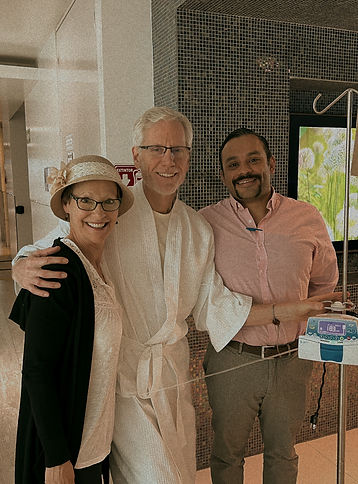
Your Role in the System
When your loved one hears the words, “You have cancer,” you immediately enter a system. Whether you embrace it as your primary strategy or you combine it with alternative strategies, either way you’ll interface with the system in some way, shape, or form.
Which can be a problem. The western medical system is brilliant, but it’s also broken.
How many times have you been on the phone with your insurance company advocating for your loved one only to be turned down… again. Maybe the person you’re speaking to treats you like a number.
So how do you navigate that system and not get frustrated – or angry - with the bureaucracy and the seeming impersonal nature of it? Or is it okay to be frustrated and angry with it?
Rather than be frustrated and maybe even lose your temper, I’d encourage you to lower your expectations of it. When you lower your expectations, it makes it a little easier to regain a proper perspective and maybe even feel a small sense of gratitude that you can be your loved one’s advocate by making phone calls on their behalf.
When you do get a lovely, understanding, patient representative on the phone, or you find a physician who truly cares, make sure you let them know how much you appreciate them.
On the other hand, make sure you raise your voice within the system. Learn the right questions to ask and ask them until you understand! Empower yourself with knowledge.
You can let the system devour you (which sometimes it feels like it is), or you can rise above and raise your voice.

The Blessing
I connected recently with a man, Bob, on Facebook who is navigating his own cancer journey. He so eloquently shares his struggles and triumphs along the way.
Bob recently lost a dear friend to cancer. The tribute to his friend Tony was so beautiful, but I was completely wrecked by the blessing he wrote to Tony’s widow Lauren and their daughters.
Here it is (used with Bob’s permission):
A Blessing for Lauren and the Girls
May the God who walked with you through every dark hallway and held your hands in every waiting room, now surround you with a peace that does not make sense. May the memory of Tony’s fierce love become a shelter for you, a lighthouse in the storms ahead, and a legacy that shapes the hearts of his daughters with courage, tenderness, and joy.
May laughter return to your home—not as a betrayal of sorrow, but as a testimony that love is stronger than death, and that Tony’s life and story has abiding impact.
May his girls grow up knowing not only that their father fought, but that he fought for them, and that his love was deeper and wider than the cancer that tried to steal him away. And may the Lord Himself—the One who binds up the brokenhearted and carries the weary— be near to you in the quiet hours, faithful in the lonely moments, and radiant in the hope of the resurrection to come.
I hope you’ll read the words of that blessing and know, dear caregiver, that that same blessing rests on you. May it encourage you as you continue to pour yourself out for those in your care.
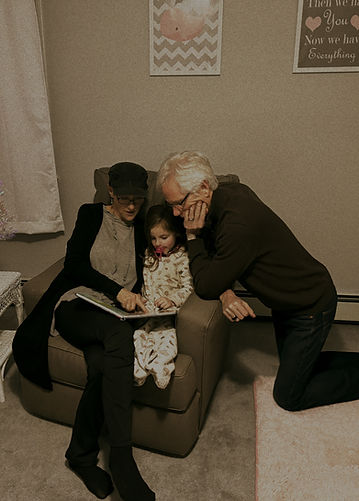
Pause…
I was listening to a podcast the other day with John Eldredge in which he talked about the app he developed called One Minute Pause. (Check it out - it can be really helpful). I’ll confess that sometimes even the word “pause” causes me to feel overwhelmed.
Taking a moment to pause is so hard to do as a caregiver. You’re juggling so many things – schedules, doctor’s visits, supplements and meds, meal prep – juggling them mentally and physically. Maybe some days you’re afraid to pause because you feel the stress of all you’re dealing with will come crashing in on you. So you keep forging ahead and operate from desperation.
When bad news comes in the cancer journey (an initial diagnosis or challenging test results),
Pause…
When you’re scrambling to get everything done before you drop exhausted into bed at night where fear of the future can get bigger in the dark,
Pause…
When you feel like you’re losing yourself in the constancy of the journey,
Pause…
So what could you do during that pause? Here are a few suggestions:
-
Find something to be grateful for. Gratitude clears judgement.
-
Breathe deeply. I find this breathing pattern calming: inhale for 4 seconds, holding that breath for 7 seconds, and release it for 8 seconds.
-
Go outside and ground yourself – barefoot in the grass. If the sun is out, turn your face toward it.
God is good. Remember He holds your days and those for whom you’re caring.
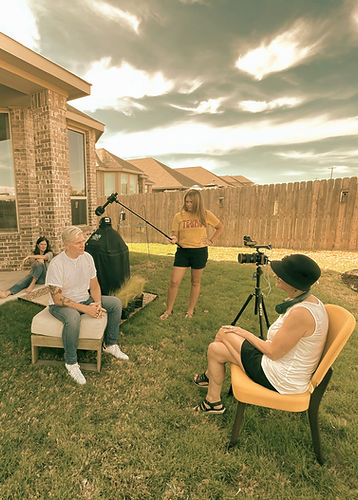
When the Person You’re Caring for Is No Longer the Person You Once Knew
One of the most painful parts of being a caregiver is witnessing your loved one become someone you no longer recognize.
This change can happen slowly, like a gradual dimming of a light, or all at once, as though a door has slammed shut between who they were and who they are now. Maybe they were once vibrant and talkative, and now they may seem quiet, withdrawn, or even irritable. Perhaps they were always sharp and independent, and now they need help with even the smallest tasks. Maybe they say things to you that they never would have said before.
These changes are often caused by the disease itself—its physical, neurological, and emotional toll—but knowing that doesn’t always make it easier.
As a caregiver, it’s okay to mourn the relationship you used to have. That grief is real. It deserves to be acknowledged—not dismissed or rushed through. Don’t push away the sadness. This is a real, valid kind of loss—what some call “ambiguous grief.” You’re mourning a change in relationship, a shift in connection, and that deserves space and compassion.
Some suggestions…
Look for glimmers of who they still are. Even when David is quiet or withdrawn, sometimes I’ll catch a familiar expression, or he’ll crack a joke that reminds me he’s still in there. I hold on to those moments like gold.
Find someone you can be honest with. Whether it’s a friend, a counselor, a support group, or your pastor—don’t carry this weight alone. You’re not meant to.
Lean into what doesn’t change. Even when our loved ones change, God does not.
Hebrews 13:8 promises, “Jesus Christ is the same yesterday and today and forever.”
When the person you love feels distant or unfamiliar, remember that God is still right beside you. Constant. Loving. Strong. You can rest in Him when everything else feels unstable.

How to Pray - Real Talk for Caregivers…
For those of us walking the cancer road with a loved one, prayer shows up at odd hours, in jagged pieces, and sometimes not at all. I want to be honest: my prayers have been tidy and polite — and they’ve been raw, angry, and wordless. All of it counts. All of it matters.
Prayer adapts to the season you’re in, whether it’s at the initial diagnosis, when it turns bad quickly, and even during the long, slow stretches.
I used to wonder if tidy, Bible-sounding prayers were “better” — more acceptable. Or if messy, angry, or confused prayers were somehow less spiritual. Here’s what I’ve come to believe: God isn’t looking for performance. He’s looking for presence.
Scripture phrases — helpful or hollow?
Scriptures like “faith as small as a mustard seed” or “the effectual fervent prayer of a righteous person avails much” can be anchors. Sometimes they steady me. Other times they feel like platitudes that don’t reach down into my hurt. That’s okay. Use them when they help. Lay them down when they don’t.
There are times when I have more questions than petitions. Asking is praying too.
The questions I carry
I ask God hard questions:
-
Do I have enough faith?
-
How do I increase it?
-
Did I do something to deserve this for my loved one or for our family?
And then I listen (or try to). I’ve learned that asking doesn’t push God away. If anything, it deepens the conversation. There is no question, accusation, or honest cry that will make God shut the door. He’s not intimidated by our anger; He welcomes our truth.
Practical truth for caregivers: two conversations
You’ll likely find yourself walking two parallel lines of speech: what you say to God, and what you say to the person you’re caring for.
With God: be honest. Say the messy things. He’s a safe place.
With your loved one: sometimes we have to measure our words, soften our edges, and protect what fragile peace remains. That’s part of caregiving. It’s not dishonesty; it’s stewardship of relationship.
You can be real with God and careful with people at the same time.
Asking the Right Questions:
The Caregiver’s Quiet "Superpower
For someone who has received a cancer diagnosis, it can be hard to hear — much less remember — what the doctor is saying. I can still remember the stunned look on David’s face at that fateful appointment. Truthfully, I feel like if I hadn’t been prepared with a notebook, neither of us would remember a bloomin’ thing! That’s why one of the most important things a caregiver can do is help make sure the right questions are asked, and that the answers don’t get lost.
In those early appointments, it’s easy for things to go in one ear and out the other. That’s not forgetfulness — it’s emotional overload. The person living with cancer may look like they’re listening, but later, they can’t remember what was said.
That’s why I always bring a notebook. I write down questions ahead of time and take notes while the doctor talks — sometimes even word for word. It helps us remember the details and gives us something solid to share with family and friends afterward. Most of all, it helps my loved one feel less alone and more in control.
Here are a few simple ways to be a helpful advocate during appointments:
-
Write down questions ahead of time. You never know when a good one will pop up — so keep a running list.
-
Take notes during the visit. Focus on test results, treatment options, and next steps.
-
Talk through what was said afterward. Reviewing together can help make sense of it all. (I find this important to do right after the appointment when it’s fresh in both our minds).
-
Sometimes, the person you’re caring for doesn’t know what to ask — or feels embarrassed asking. You can gently help by saying things like:
-
“What’s been worrying you the most?”
-
“Is there something you’ve been meaning to ask?”
-
“Want me to help make a list before we go?”
-
At the end of the day, your steady presence — your listening, your note-taking, your willingness to stand beside them — is more than enough. A notebook may seem like a small thing, but it’s a tool for clarity, courage, and connection.

Suffering Silently
“I could go on and on, but my heart is broken and lonely. It’s so hard to suffer silently — it’s isolating.”
A friend said those words to me recently, and my heart ached for her.
There are days when I want to share my fears and concerns about this journey with David. But I hold back, thinking, He’s got enough on his plate. If I share, I tell myself, he’ll have to carry not just his own fears, but mine too.
The truth is, our fears and concerns as caregivers are real. Pretending they don’t matter isn’t helpful — and stuffing them down doesn’t make them disappear. In fact, we all know that bottled-up emotions have a way of bursting out eventually… and it’s rarely pretty when they do.
Sometimes the hardest part is not having a safe space to be honest. Maybe you’ve tried to share your heart with your loved one, only to feel misunderstood, dismissed, or shut down. And so, you learn to keep quiet. You suffer in silence.
For me, laying those fears and concerns at Jesus’ feet has been my lifeline. It feels right and good — because He’s always a safe place. He’ll never tell me not to feel what I feel. Yes, He says, “Fear not,” but I know He’s okay with me saying, “I’m afraid.” Lord, I believe — help my unbelief. After all, He created me. He knows my frame.
“Cast all your anxiety on Him because He cares for you.” — 1 Peter 5:7
“The Lord is close to the brokenhearted and saves those who are crushed in spirit.” — Psalm 34:18
But what about when you need to talk to someone with skin on?
Sometimes we hesitate, thinking, I don’t want to burden anyone. Everyone has their own stuff. But maybe — just maybe — there’s someone out there whose gift is encouragement. Someone who would actually be filled by filling your cup. Maybe it’s that rare person who, after asking how your loved one is doing, adds, “And how are you doing?” And actually means it.
“Carry each other’s burdens, and in this way you will fulfill the law of Christ.” — Galatians 6:2
So here’s my encouragement to you: first, take those fears to Jesus. He will always listen, and He promises to restore your soul.
“Come to me, all you who are weary and burdened, and I will give you rest.” — Matthew 11:28
But if some days that still doesn’t feel like enough — pick up the phone. Call that friend.
You don’t have to suffer silently.

Dealing with Their Discouragement
They say the woman “sets the tone” for the whole household. As a woman, I sometimes think that’s a little unfair! But often, it’s pretty accurate. When I’m able to rise above my circumstances and choose cheerfulness and positivity (even when I don’t feel like it), the atmosphere in our home becomes lighter, warmer, and more hopeful.
As a caregiver, though, that’s a tall order. You’re already carrying the weight of extra responsibilities while navigating your own emotions on this unpredictable cancer journey. Staying “up” for everyone – including yourself – can feel impossible.
And when your loved one is discouraged? It’s even harder. Being a cheerleader to someone who’s down, especially someone who stays down, can feel like running a marathon with no finish line.
In this journey, there are different kinds of “down.” Sometimes it’s temporary – a rough illness (David just got over shingles – UGH), unsettling scan results, or the frustration of waiting for a doctor’s call. But then there’s the deeper discouragement – the kind that may be part of your loved one’s personality or the heavy weight of a difficult prognosis. That type doesn’t lift easily, even when circumstances improve.
Here’s what I want to encourage you with: you are not responsible for the mental state of the one you are caring for. You may long for them to be more cheerful or hopeful, but you cannot make that happen. You are only responsible for your own outlook and emotional well-being.
Proverbs 17:22 tells us, “A merry heart does good like medicine.” That “merry” means joyful, happy, full of cheer. For your own sake, nurture your spirit daily. Spend time in God’s Word and in His presence, where He promises fullness of joy (Psalm 16:11).
Let His truth refresh your soul and gladden your heart.
And if your joy spills over to your loved one? Wonderful. If not, you can trust you’re still planting seeds – seeds that may take root in God’s perfect timing.

Just Speaking My Mind
Some days, this caregiver journey seems to come down to one question: Do I say it, or do I keep it to myself?
If you’re a caregiver, you’ve likely been there. You try to say something helpful, but it comes out wrong. Instead of care, it sounds like nagging. Instead of concern, it sounds like fear. Instead of love, it sounds like disapproval. You know what you meant—but it’s not always what your loved one hears.
Sometimes, saying it makes me feel better—but what if it makes him feel worse? That’s the dilemma. If I “stuff it,” I risk harming myself. If I “say it,” I risk harming our relationship.
Proverbs reminds us that “when words are many, transgression is not lacking.” Fewer words often mean fewer regrets. Still, what do we do with all the thoughts and feelings that rise up in the day-to-day? Not the big things we might share with friends, but the little frustrations, fears, and weariness that build up in the caregiving grind.
For me, the answer is bringing even the minutia to God. I ask Him to show me which words are worth speaking and which are better left unsaid. And if something truly needs to be said, I try to pause, take a breath, and ask for His help to speak with gentleness.
And when it still doesn’t come out right—because let’s be honest, that happens—I ask God to protect me from offense, to help me explain my heart with grace, and to let love, not frustration, have the last word.