All About The Prostate
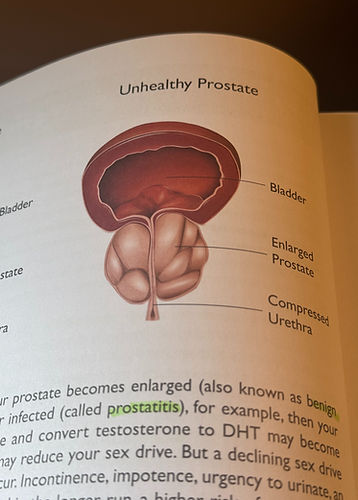
When I was first diagnosed with stage four prostate cancer, I realized that I was embarrassingly ignorant of purpose of this organ in my body.
Like most men, I had heard of PSA tests. I knew prostate cancer was “common.” Even with the fact that my dad died of Prostate cancer, I never dug in to learn more for my benefit. I chose to be largely uninformed about a gland that plays a significant role in a man’s health, sexuality, and quality of life.
Don't be like me!!!!
That is why I strongly recommend All About the Prostate by Ben Ong to any man who has received a diagnosis, is walking alongside someone who has, or simply wants to be proactive about prevention.
Ben Ong does something incredibly valuable. He takes a topic that can feel overwhelming and explains it in clear, understandable language without oversimplifying it.
Here is a brief outline of what makes this book so helpful:
Understanding the Prostate
• What the prostate actually does
• How it changes as we age
• Why enlargement is common
• The difference between normal aging and disease
This section alone helps remove unnecessary fear and confusion.
Common Prostate Conditions
• Benign Prostatic Hyperplasia (BPH)
• Prostatitis
• Prostate cancer
• Symptoms that deserve attention
Many men lump everything together. Ong carefully distinguishes between conditions that are uncomfortable but manageable and those that require more serious consideration.
Prostate Cancer Explained
• What prostate cancer is
• Risk factors and contributing influences
• PSA testing and what the numbers mean
• Understanding Gleason scores
• Slow-growing versus aggressive cancer
When you hear the word “cancer,” it can feel like your world stops. This section helps you regain clarity so you can make informed decisions instead of reactive ones.
Testing and Treatment Options
• Biopsies and imaging
• Surgery and radiation
• Hormone therapy
• Active surveillance
• Potential side effects
One of the most important lessons I’ve learned on this journey is that every decision carries trade-offs. Knowledge helps you weigh those decisions wisely.
Prevention and Lifestyle
• The impact of diet and inflammation
• Exercise and metabolic health
• Stress and immune function
• Evidence around supplements
This section is empowering. It reminds us that we are not passive observers of our health.
Sexual Health and Quality of Life
• Erectile function
• Urinary control
• Emotional and relational impact
This is an area few men talk about openly. Yet it profoundly affects marriages, identity, and confidence. Ong addresses it with honesty and compassion.
Why I Recommend It
If I had understood more about my prostate years before my diagnosis, I would have approached my health differently. I might have asked better questions sooner. I might have understood warning signs more clearly.
Whether you are newly diagnosed or simply want to steward your health wisely, this book provides a foundation of understanding. It equips you to have intelligent conversations with doctors, to consider your options thoughtfully, and to move forward with less fear.
Guys, there is no better time to learn about your prostate than right now. Buy the book, you will thank me for it.
Chemical Castration
AKA ADT
A Personal Reflection...
This following is for men currently on androgen deprivation therapy (ADT), those contemplating it, or partners walking alongside someone facing this decision.
I still remember sitting in the oncologist’s office when I first heard the term. I had just been diagnosed with Stage 4b prostate cancer. As he laid out standard treatments. He said I would need to take a hormone that would chemical castrate me. ADT. I had never heard of ADT, not it was considered the standard of care for men with advanced or metastatic prostate cancer.
This was a Friday and he said emphatically that I should start taking it on Monday.
As I share in our film, it felt like a bomb went off in the room. Thankfully, Kathi was there. She leaned in and listened carefully as I tried to process what I was hearing.
ADT works by reducing testosterone to what doctors call “castrate levels.” In 1941, research by Dr. Charles Huggins demonstrated that prostate cancer often depends on testosterone to grow. At that time, the primary treatment was surgical castration. In the late 1970s and early 1980s, hormone medications were developed that could suppress testosterone chemically instead of surgically, leading to what is now known as androgen deprivation therapy.
ADT.
The goal is to lower your PSA level and slow the spread of cancer. And it has proven to do both. But not without a price to pay.
I think we all know that testosterone is not a minor hormone. It plays a profound role in energy, muscle mass, bone density, sexual function, mood, and overall vitality. Living without it can have significant consequences, physically and emotionally. The impact reaches beyond the body. It affects identity, relationships, and quality of life.
Kathi and I made the decision not to pursue ADT. I have said no to it multiple times. We have been told that I will probably die much sooner because of this. This was a mutually agreed on choice between Kathi and me. I am not suggesting that you follow my lead. This is between you and your doctor.
But please keep reading.
One oncologist told me I have been fortunate that, three years into this diagnosis, my cancer has not progressed to the point of overwhelming my body, even though it has continued to spread. But eventually it would take it's toll and I would succumb.
Here's what I, as an insider, feel a deep need to say:
Before you begin a treatment that will dramatically alter your hormonal system, get more than one opinion. Not just a second opinion. Consider a third, fourth, fifth, or even more. Ask hard questions. Explore all available options. Understand not only the potential extension of lifespan, but the impact on healthspan.
For me, this has become a calling. I continue to pursue alternatives, believing that as medicine evolves and our healthcare system changes, there may be approaches that allow us to fight cancer without fully compromising the very systems that give us strength and vitality.
There has to be a better way. I refuse to believe there isn't.
If you are facing this decision, please do not rush it without understanding the implications. Whatever you decide, let it be an informed decision. Let it be your decision and a fear based reaction after being stared down by your oncologist.
This is not just about cancer. It is about your life, your relationships, and the kind of man you hope to remain in the midst of the fight.